
TMS Therapy in Colorado Springs
Depression Not Improving With Medication? TMS Can Help.
Drug-free, insurance-covered treatment for depression. Book your consultation in Colorado Springs today.
No medication side effects
Covered by most insurance plans
20-minute sessions with no downtime
Currently accepting new TMS patients — limited consultation slots available each week.
Most Major Insurance Accepted
FDA-Cleared Treatment
TMS-Certified Providers
Is TMS Right For You?
TMS therapy may be a good fit if any of these sound familiar:
You've tried antidepressants, but they haven't provided enough relief
Medication side effects are affecting your quality of life
You want a treatment option that doesn't involve daily pills
You've been diagnosed with treatment-resistant depression
You're looking for an evidence-based, non-invasive alternative
What Is TMS Therapy?
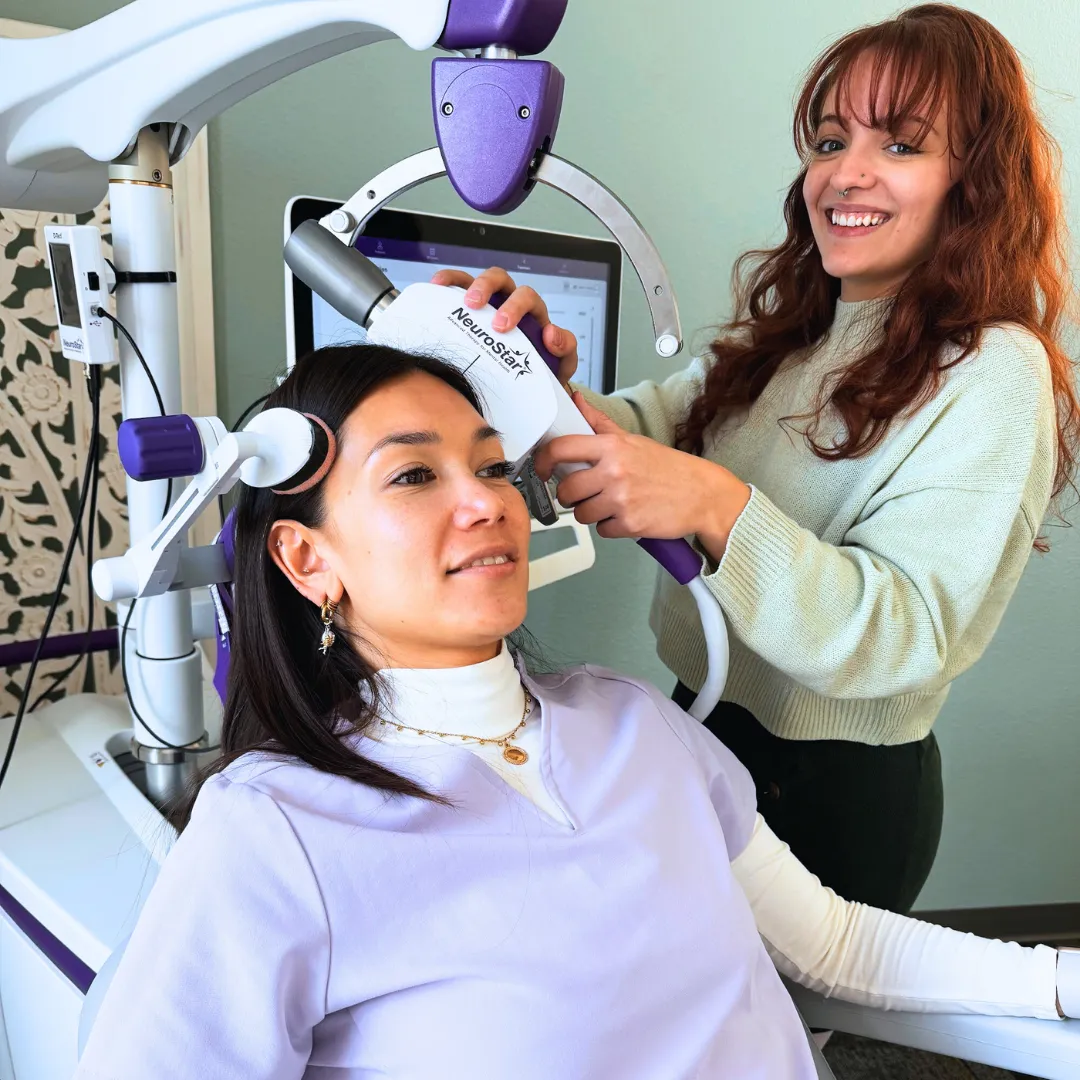
TMS (Transcranial Magnetic Stimulation) is a non-invasive treatment that helps improve depression symptoms by stimulating underactive areas of the brain.
It does not involve medication, requires no anesthesia, and you can return to your normal routine immediately after each session.
Sessions typically last about 20 minutes and are completed in-office.
Is TMS Covered By Insurance?









TMS therapy is covered by most major insurance plans. Our team will verify your benefits and walk you through your coverage so you know exactly what to expect.
Not sure if you're covered? We’ll check your benefits for you.
What our Patients Say
Patients who felt stuck are finding relief with TMS.
What To Expect
Getting started is simple — just three steps.
Step 1
Schedule a Consultation
Choose a time that works for you and speak with a provider about your options.
Step 2
Meet With a Provider
We'll review your symptoms, discuss medication history, and determine if TMS is right for you.
Step 3
Start Your Personalized Plan
If you're a good fit, we'll guide you through next steps and insurance.
Frequently Asked Questions
Questions we commonly get about TMS. If your question isn't answered, reach out or schedule a free consult call.
What is TMS - Transcranial Magnetic Stimulation?
Transcranial magnetic stimulation (TMS) is a non-invasive treatment that uses repetitive magnetic pulses to stimulate nerve cells in the brain to improve symptoms of depression. During a TMS session, an electromagnetic coil is placed against the scalp. The electromagnet pulse stimulates nerve cells in the region of your brain involved in mood control and depression. TMS Therapy is typically used when other depression treatments have not been effective.
How does TMS work?
The TMS Machine generates magnetic pulses to simulate the region of the brain that is responsible for depressive symptoms and mood regulation. Think of it like physical therapy for the brain.
What does a TMS session feel like?
Most people describe the sensation as a light tapping on the scalp. There may be some mild discomfort at first, although this often improves over time. The magnetic coil which delivers TMS is positioned on the head. You will hear a clicking sound and feel a tapping sensation
on your head when the magnetic pulses are delivered. Many patients watch television or read during treatment.
What does the treatment schedule look like?
Most insurances allow for TMS treatment over a 6-week period, 5 times per week. Each treatment is typically between 3 and 37.5 minutes depending on what the provider determines to be best for you. Every day Monday-Friday for the first 30 sessions (6 weeks) and then a taper for the last 6 sessions.
Will I need follow-up treatment?
Each patient is different, however you can discuss long-term treatment planning with your provider. Retreatment is often prescribed and covered if you have responded to TMS therapy in the past.
How long will it take for TMS to work?
This will vary from person to person. It is commonly reported that patients need 30 to 36 sessions of TMS to feel relief from their depression symptoms. In clinical trials, approximately 82% of treatment-resistant patients responded positively to rTMS therapy.
Is TMS safe?
Yes, TMS has over two decades of clinical and scientific research supporting its safe use and application. FDA-cleared for the treatment of MDD and OCD, TMS Therapy is an effective, non-invasive, outpatient treatment, with few known side effects.
Is TMS covered by my insurance?
TMS is covered by most insurance providers including Medicare. Prior authorization is typically required for insurance coverage, and your provider will manage this process. Often, treatment with antidepressant medications and psychotherapy may be needed before insurance will authorize TMS Therapy.
Who can get TMS treatment?
Magstim TMS Therapy Systems are indicated for the treatment of Major Depressive Disorder in adult and adolescent patients who have failed to achieve satisfactory improvement from prior antidepressant medication. Your current provider may refer you to a TMS-trained physician who can best determine if you are a candidate for TMS Therapy.
Who cannot do TMS?
TMS Therapy is well tolerated for most. However, not all patients are appropriate candidates for TMS Therapy. For example, patients with a history of seizures or who have ferromagnetic implants or objects in or near their head may not be appropriate candidates for TMS Therapy. To determine if TMS Therapy is right for you, your supervising doctor or psychiatrist will carefully screen for the presence of medical conditions or metal objects which may make TMS unsuitable.
Does Medicaid cover TMS?
Unfortunately Medicaid does not cover TMS in the state of Colorado at this time. Self pay options are available.
If Medication Hasn't Been Enough, This Could Be Your Next Step
Schedule a consultation to see if TMS is right for you.
We'll walk you through everything and answer any questions you have.
Bright Futures Psychiatry
4729 Opus Dr, Colorado Springs CO 80906
© Copyright 2026 | Bright Futures Psychiatry | Privacy Policy